
Where smart home robotics still falls short today
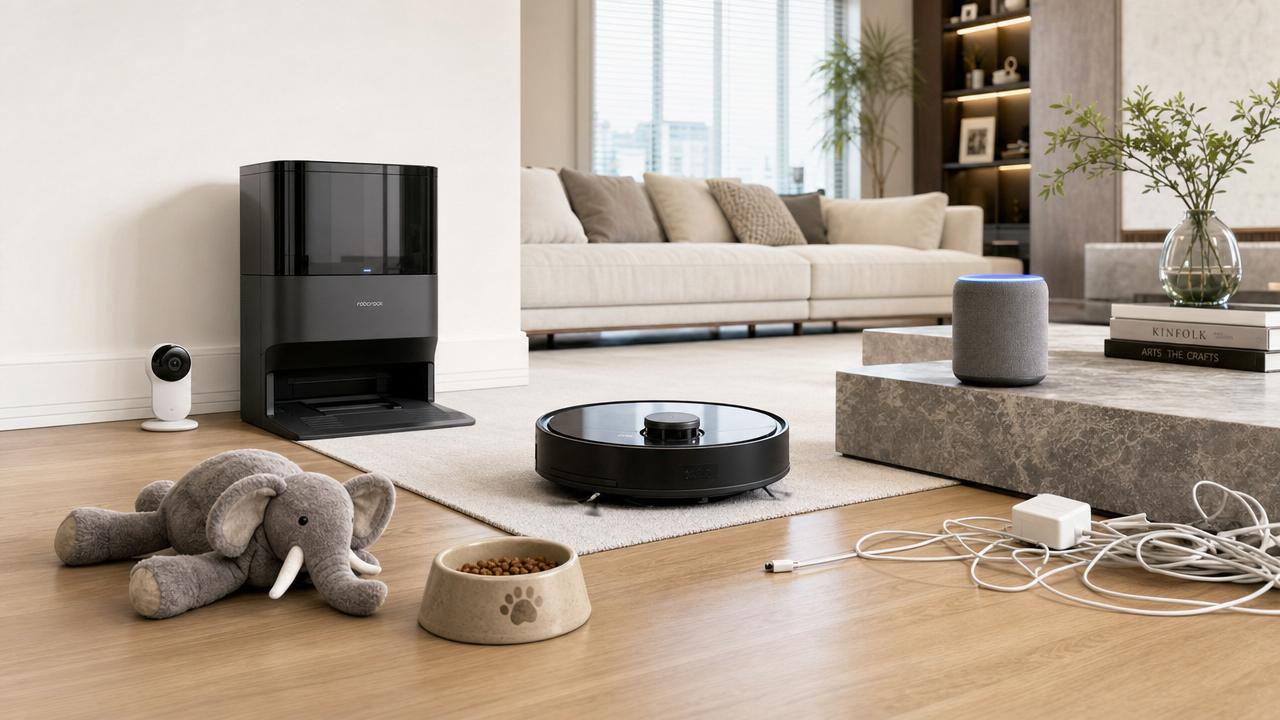
Smart home robotics is advancing, but the gap between demos and daily life remains wide
Smart home robotics has moved from novelty to mainstream discussion across cleaning, cooking, security, wellness, and connected living.
Yet real adoption still depends on one hard question: does the robot work consistently in messy, unpredictable homes?
That question matters because expectations have changed faster than product maturity.
Consumers now expect smart home robotics to save time, reduce friction, and operate safely without constant supervision.
The market story is compelling, but the operational reality is more uneven.
Where smart home robotics still falls short today is not in imagination, but in reliability, interoperability, trust, and lifecycle usability.
For intelligence platforms such as CSOS, these weak points reveal where the next competitive edge will be built.
The winners will not merely add sensors or AI labels.
They will close the distance between advanced hardware capability and effortless human experience.
Current signals show smart home robotics is entering a more demanding phase
Early growth in smart home robotics was powered by convenience marketing and visible automation gains.
Robot vacuums, lawn mowers, pool cleaners, and home assistants proved that repetitive tasks could be partially automated.
Now the market is shifting from first-purchase excitement to performance scrutiny.
Users compare obstacle avoidance, app stability, maintenance burden, and cross-device coordination.
Retail reviews increasingly focus on edge cases rather than headline functions.
That change signals maturity.
In this phase, smart home robotics must survive cluttered rooms, mixed flooring, pets, children, weak Wi-Fi, and multi-user homes.
The challenge is no longer whether a robot can automate one task.
The challenge is whether smart home robotics can deliver dependable autonomy across thousands of real situations.
The strongest trend signal is rising intolerance for “almost smart” behavior
Consumers accept software updates, but they do not accept repeated rescue work.
If a robot needs frequent untangling, remapping, resetting, or manual cleaning, its value proposition weakens quickly.
This is why smart home robotics now faces a higher standard than many adjacent smart devices.
A light bulb can fail softly.
A mobile home robot cannot.
The main reasons smart home robotics still falls short today
Several factors explain why smart home robotics still struggles to meet the full promise of seamless domestic automation.
Perception intelligence is still narrower than marketing suggests
Many smart home robotics systems perform impressively in controlled environments.
However, domestic spaces are highly variable and visually chaotic.
Lighting changes by hour.
Objects move constantly.
Floor texture, moisture, pets, and human behavior all disrupt neat prediction models.
This is where machine vision, SLAM, and edge AI still show practical limits.
Battery, motor, and thermal constraints still shape performance ceilings
Smart home robotics depends on a delicate balance between runtime, suction or torque, noise, heat, weight, and cost.
Extreme performance in one dimension often weakens another.
That tradeoff is especially visible in compact home robots.
Small chassis leave little room for larger batteries, stronger cooling, or redundant sensors.
The biggest impact is on user trust, product economics, and brand differentiation
When smart home robotics underdelivers, the damage extends beyond one failed cleaning cycle or one broken routine.
It changes repurchase intent, return rates, review quality, and support costs.
This creates a difficult commercial pattern.
As hardware categories mature, baseline features become easier to copy.
Meanwhile, the unresolved weaknesses of smart home robotics become the real differentiators.
- High support demand can erase margin, especially in DTC models.
- Weak onboarding lowers activation of premium functions.
- Privacy concerns slow adoption of camera-based smart home robotics.
- Poor compatibility limits cross-category ecosystem expansion.
- Inconsistent autonomy makes premium pricing harder to defend.
For sectors spanning cleaning robots, kitchen systems, wellness devices, and outdoor power solutions, the lesson is similar.
Consumers reward systems that reduce cognitive load, not just labor.
The next generation of smart home robotics must therefore be judged as an experience platform, not a gadget bundle.
What deserves the closest attention in the next wave of smart home robotics
The strongest opportunities now sit at the intersection of algorithm maturity, hardware robustness, compliance, and human-centered design.
- Multi-modal sensing that combines LiDAR, vision, tactile feedback, and contextual learning.
- Edge processing that reduces latency, improves privacy, and keeps key functions available offline.
- Self-maintenance architecture that minimizes manual emptying, washing, drying, and filter intervention.
- Safer battery systems aligned with stricter global certification expectations.
- Interoperability with Matter, voice ecosystems, and broader home automation logic.
- Transparent AI behavior that explains why the robot stopped, avoided, or changed route.
A hidden priority is failure recovery, not just peak performance
Many brands optimize for best-case demonstrations.
But real loyalty comes from how smart home robotics handles interruptions.
Can it resume after a moved chair?
Can it recognize a clogged brush before failure?
Can it guide the user to one clear corrective action?
These details often decide whether automation feels magical or tiring.
A practical response requires sharper priorities, not broader feature lists
The most effective response to current smart home robotics limits is disciplined focus.
This approach is especially relevant for brands operating in premium consumer hardware.
In crowded categories, fewer but better-executed capabilities often outperform aggressive specification expansion.
The next step is to evaluate smart home robotics through an experience-and-systems lens
Where smart home robotics still falls short today offers a useful map for future investment.
The market does not need more inflated claims.
It needs robots that operate safely, recover gracefully, integrate cleanly, and reduce both physical and mental effort.
A strong evaluation framework should examine five questions.
- Does the smart home robotics system perform well in messy real homes?
- Can it maintain value after software updates and repeated usage?
- Is the privacy and safety model credible across target regions?
- Does it simplify the ecosystem instead of complicating it?
- Will the user recommend it after six months, not six minutes?
That final question may be the most important signal of all.
The future of smart home robotics will belong to systems that turn technical excellence into invisible, trusted, everyday utility.
Tracking those shifts closely is essential for anyone shaping the next era of intelligent living and global consumer hardware growth.
Related News
- Smart Health Explained: How Connected Devices Turn Daily Data Into Care DecisionsSmart health turns daily data from wearables and connected devices into practical care decisions. Discover how to interpret trends, improve routines, and know when to seek support.Time : Oct 12, 2026
- How to Select a Brushless Motor System for Torque, Speed, and Thermal LoadBrushless motor systems selection guide for matching torque, speed, gearing, controller limits, and thermal load to achieve reliable real-world performance.Time : Sep 25, 2026
- What Should You Do If a Smart Health Device Gives Inaccurate Readings?What should I do if a smart health device has inaccurate readings? Learn practical troubleshooting steps, safe comparison methods, and when to seek medical advice.Time : Sep 29, 2026