
Are smart home appliances getting easier to integrate?
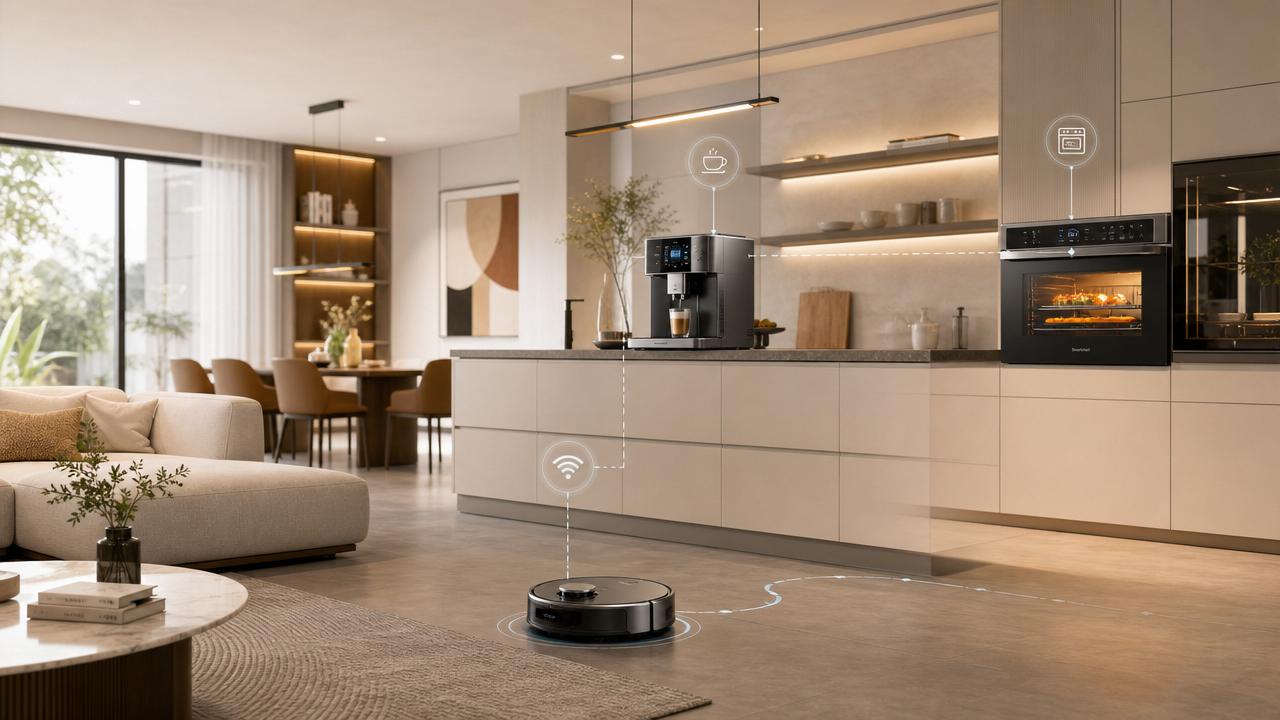
Smart home appliances are getting easier to integrate, but not in a simple, universal way. For most buyers and market observers, the short answer is yes: setup is improving, devices are communicating more smoothly, and ecosystems are becoming less fragmented than they were a few years ago.
The bigger reality, however, is that integration still depends on product category, platform support, wireless standards, and the quality of software design behind the hardware. Some smart home appliances now feel nearly plug-and-play, while others still require app juggling, workarounds, and ecosystem compromises.
For information researchers, this matters because integration has become one of the clearest indicators of product maturity. It affects user satisfaction, return rates, long-term retention, and brand competitiveness across cleaning robots, smart kitchen systems, wellness devices, and connected lifestyle hardware.
Are smart home appliances actually getting easier to integrate?
Yes, in most major categories, smart home appliances are becoming easier to integrate. The improvement comes from better mobile onboarding, stronger cloud infrastructure, smarter edge computing, and growing support for shared interoperability standards such as Matter, Thread, and expanded API frameworks.
In practical terms, users are spending less time manually connecting devices and more time using them. A robot vacuum can now map a home, sync with voice assistants, and fit into routines with fewer technical steps than older models required.
Smart kitchen appliances are also moving beyond isolated novelty products. Connected coffee machines, air fryers, ovens, and nutrition-focused devices increasingly use companion apps that offer recipe guidance, automation, maintenance reminders, and synchronization with broader home ecosystems.
Health and wellness hardware is following the same path. Massage chairs, sleep systems, and climate-adaptive comfort devices are starting to combine app control, user profiles, and sensor-based personalization in ways that reduce friction and make the connected experience feel more coherent.
That said, “easier” does not mean “fully seamless.” Integration has improved most where brands have aligned hardware engineering, software usability, and ecosystem compatibility. It remains weak where products are launched as connected add-ons rather than as truly integrated experiences.
What is making integration smoother than before?
The first major driver is standardization. In the past, many smart home appliances were locked into proprietary apps and narrow ecosystems. Today, the industry is moving toward broader compatibility models that reduce the need for custom setup paths.
Matter has become the most visible symbol of this change. While its appliance coverage is still evolving, its promise is important: one device can work across multiple major ecosystems without forcing users to commit entirely to one brand family.
Thread also plays a quiet but important role. As a low-power, resilient networking protocol, it helps connected devices communicate more reliably inside the home. Better networking directly improves integration because unstable connections are often the hidden reason smart products feel difficult.
A second driver is stronger onboard intelligence. Smart appliances are no longer just internet-connected machines. Many now include local processing for mapping, sensing, behavioral adaptation, and context recognition, which allows them to operate more intelligently with less user intervention.
Robot vacuums are a strong example. LiDAR, machine vision, and SLAM-based navigation have transformed them from random movers into coordinated systems that understand rooms, obstacles, schedules, and user preferences. That technical maturity makes them easier to integrate into daily routines.
A third factor is user-centered app design. The best brands now understand that consumers do not measure integration by protocol charts. They judge it by whether setup is fast, controls are intuitive, automations are useful, and troubleshooting is rare.
This is why high-performing smart home appliances increasingly feature QR-based onboarding, automatic device discovery, step-by-step pairing flows, and preset routines. Good software design has become just as important as sensor quality or motor efficiency.
Which appliance categories are improving fastest?
Smart cleaning appliances are among the clearest winners. Robot vacuums and wet-dry floor systems have advanced rapidly because their value depends on autonomous operation. If they are difficult to configure, the product promise collapses almost immediately.
As a result, leading cleaning brands have invested heavily in mapping interfaces, room labeling, no-go zones, multi-floor memory, and integration with smart speakers and household routines. These features make the devices feel like part of a system rather than standalone gadgets.
Smart kitchen appliances are improving, but at uneven speed. Products with clear, repeatable workflows, such as coffee systems, air fryers, and countertop ovens, tend to integrate more naturally because their use cases support recipes, scheduling, and profile-based personalization.
By contrast, some connected kitchen devices still struggle to justify their app layer. If integration adds complexity without saving time, users quickly ignore the connected features. This is a common weakness in products built around marketing trends rather than genuine workflow benefits.
Wellness appliances are another promising category. Premium massage chairs, recovery devices, and climate comfort systems increasingly use body scanning, stored preferences, and guided programs to create a more personal experience. Integration here is less about ecosystem breadth and more about personalized continuity.
Outdoor and portable smart systems, including power stations and connected mobility hardware, are also evolving. Their integration challenge is different: users need stable apps, battery monitoring, firmware updates, safety diagnostics, and sometimes cross-device coordination under variable usage conditions.
Where do integration problems still remain?
The biggest problem is ecosystem fragmentation. Even though standards are improving, many smart home appliances still work best inside limited platform environments. A product may support voice control in one ecosystem but offer deeper automation only in its own app.
This creates a gap between advertised compatibility and real operational compatibility. Consumers may see labels suggesting broad support, then discover that advanced features such as custom routines, data history, or device-to-device triggers are partially restricted.
A second issue is inconsistent software maintenance. Hardware may be excellent, but if app updates are slow, cloud services unstable, or firmware support weak, the integration experience declines over time. This is especially important for premium products with longer replacement cycles.
Privacy and data handling also remain concerns. The more deeply smart home appliances integrate into routines, the more user data they can collect. Cameras, microphones, mapping systems, and behavioral logs introduce trust questions that some consumers still find uncomfortable.
Another challenge is network dependency. Devices that rely too heavily on cloud access can become frustrating during outages or service changes. Integration feels easiest when products combine cloud convenience with local resilience, rather than forcing every action through remote servers.
Finally, there is the issue of feature overload. Some brands add connectivity to products that do not need it, creating unnecessary complexity. Integration should remove friction, not generate additional menus, notifications, and maintenance burdens for the user.
What do consumers really mean when they want easy integration?
Most consumers are not asking for technical interoperability in abstract terms. They want simple outcomes. They want a vacuum that cleans on schedule, a coffee machine that remembers preferences, and a wellness device that starts the right program without repeated setup.
In that sense, easy integration means low-friction ownership. The product should connect quickly, work reliably, cooperate with other devices when useful, and continue delivering value without constant user management. Convenience is the benchmark, not connectivity alone.
Consumers also want predictability. They do not want to wonder whether a firmware update will break routines or whether a new phone will require full reconfiguration. Trust in smart home appliances grows when the system behaves consistently over time.
Another expectation is invisible intelligence. The most successful products are often those that hide technical complexity behind straightforward experiences. Users appreciate machine vision, battery management, and sensor fusion, but they reward brands that translate those capabilities into effortless daily use.
This is especially relevant in categories tied to chores, health, or comfort. These are routine-driven moments. If integration does not reduce effort, the connected layer becomes a burden rather than a benefit, regardless of how advanced the underlying hardware may be.
How should researchers and buyers evaluate integration quality?
First, look beyond compatibility badges. A product that says it works with major ecosystems may still deliver a limited experience outside its native app. Review what functions are actually shared, including automation depth, voice commands, scheduling, and cross-device triggers.
Second, examine onboarding quality. Good smart home appliances should offer stable pairing, clear instructions, and minimal setup friction. Reviews that mention repeated connection failures, confusing permissions, or unreliable firmware updates are often early warnings of deeper integration weakness.
Third, assess local intelligence and fallback behavior. Products that maintain core functions offline or continue operating during cloud interruptions are usually better designed. Local processing is not just a performance feature; it is also an integration stability advantage.
Fourth, consider update discipline. Brands with strong software teams treat connectivity as a long-term product commitment. They improve compatibility, security, and usability after purchase. In connected hardware, post-sale software quality increasingly defines customer experience.
Fifth, evaluate whether the integration solves a real user problem. The best smart home appliances combine hardware capability with useful context: a mop that returns to wash itself, an espresso machine that saves user profiles, or a recovery chair that adapts based on body scan data.
What does this trend mean for global smart hardware brands?
For brands, easier integration is no longer a nice feature. It is a strategic requirement. As product performance converges across many categories, the ability to deliver a smooth connected experience becomes a major differentiator in crowded DTC and retail markets.
Integration quality affects more than user satisfaction. It influences conversion, review sentiment, service costs, return rates, and brand trust. A product with excellent hardware but weak integration can lose market momentum quickly, especially when consumers compare app experiences side by side.
For premium and globally expanding brands, interoperability also supports localization and scale. Products that connect smoothly across regions, platforms, and household preferences are easier to position internationally than devices tied to narrow software assumptions.
This is particularly relevant in categories like robot vacuums, kitchen systems, E-bike ecosystems, and connected wellness products. In each case, buyers increasingly expect not just device intelligence, but system intelligence that fits into broader digital routines.
Brands therefore need to think beyond isolated SKUs. The competitive moat is shifting toward full-stack coordination: motors, sensors, battery systems, edge algorithms, app experience, cloud reliability, compliance, and ecosystem partnerships all need to work together.
That is where market intelligence matters. Understanding not only what features competitors offer, but how well those features integrate into real-life use, is now central to product strategy. In smart hardware, friction is often the hidden reason products fail.
So, are smart home appliances getting easier to integrate?
Yes, and the change is meaningful. Smart home appliances are becoming easier to integrate because standards are improving, software is maturing, and brands are increasingly designing products around real user routines rather than around connectivity for its own sake.
Still, progress is uneven. The best products now deliver a connected experience that feels natural and useful, while weaker products remain trapped between hardware ambition and software inconsistency. Integration is improving, but seamlessness is not yet universal.
For consumers and researchers, the key takeaway is simple: judge smart home appliances by how effectively they reduce effort in everyday life. True integration is not about how many systems a product can theoretically connect to. It is about how smoothly it works when people actually live with it.
For brands, the message is even clearer. The future belongs to connected hardware that combines advanced engineering with low-friction experience design. In modern living, the smartest appliance is not the one with the longest feature list, but the one that fits most naturally into daily life.
Related News
- Smart Health Explained: How Connected Devices Turn Daily Data Into Care DecisionsSmart health turns daily data from wearables and connected devices into practical care decisions. Discover how to interpret trends, improve routines, and know when to seek support.Time : Oct 12, 2026
- How to Select a Brushless Motor System for Torque, Speed, and Thermal LoadBrushless motor systems selection guide for matching torque, speed, gearing, controller limits, and thermal load to achieve reliable real-world performance.Time : Sep 25, 2026
- What Should You Do If a Smart Health Device Gives Inaccurate Readings?What should I do if a smart health device has inaccurate readings? Learn practical troubleshooting steps, safe comparison methods, and when to seek medical advice.Time : Sep 29, 2026