
What consumer hardware intelligence really changes at home
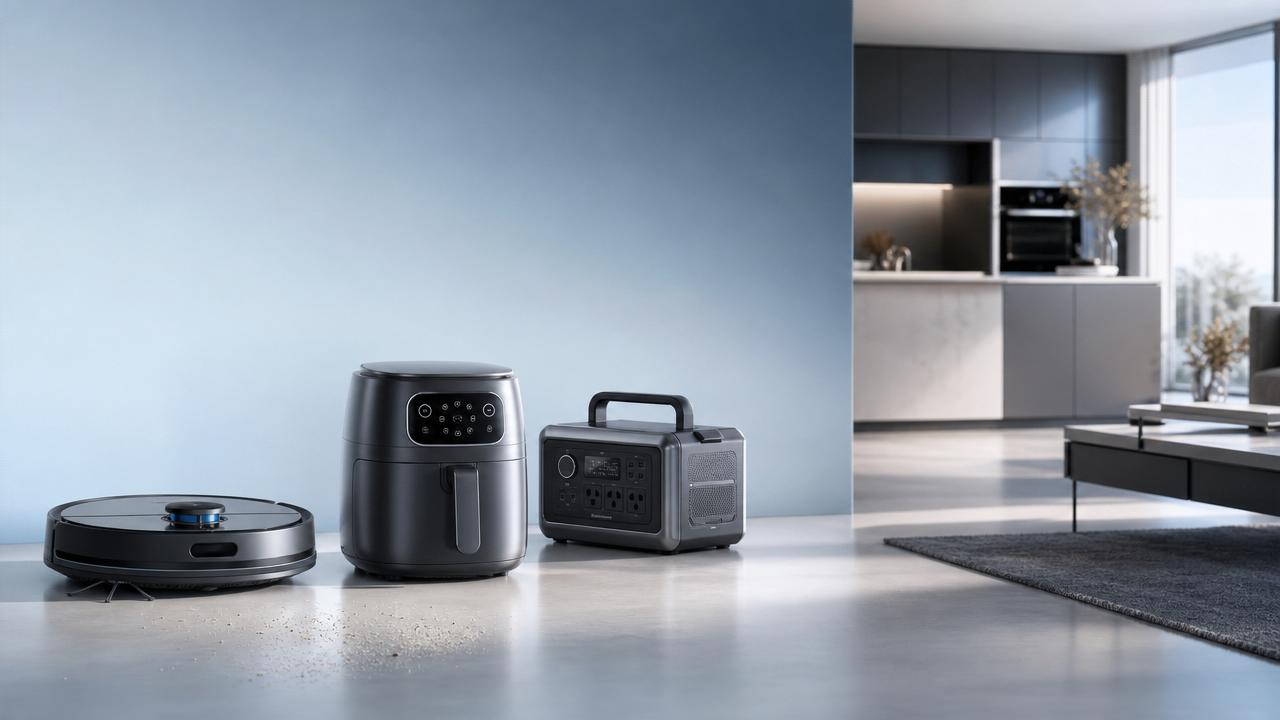
Consumer hardware intelligence is no longer a futuristic slogan. It now shapes how homes clean, cook, recover, recharge, and even connect to outdoor life.
For researchers following global demand, consumer hardware intelligence explains why ordinary devices suddenly feel more useful, more autonomous, and more personal.
CSOS tracks this shift across smart cleaning, kitchen systems, wellness devices, e-bikes, and outdoor energy gear, linking engineering progress with real household decisions.
What does consumer hardware intelligence actually mean at home?
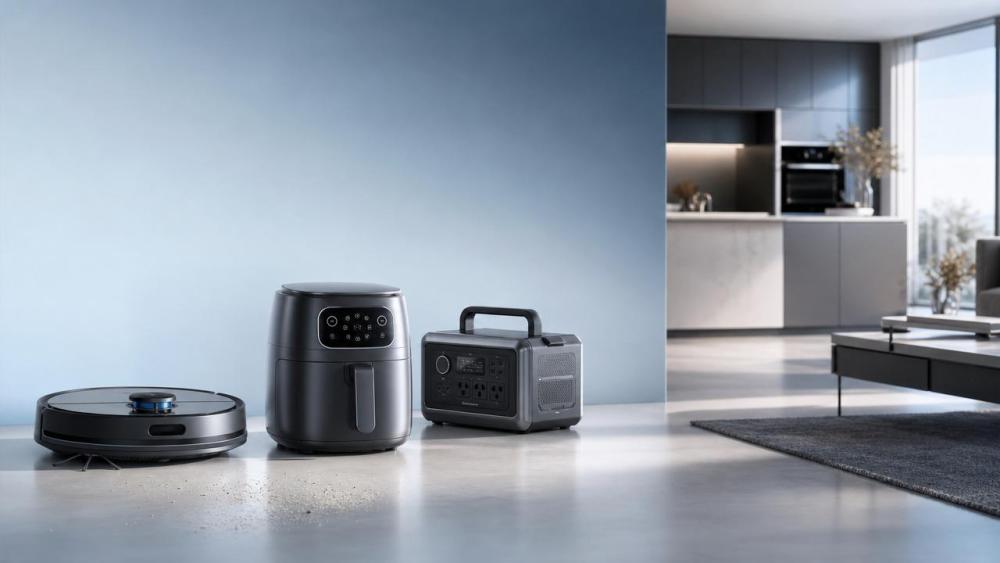
Consumer hardware intelligence means physical products can sense, decide, and respond with minimal human input.
At home, that intelligence usually combines sensors, embedded software, machine vision, connectivity, and efficient power control.
The change is practical rather than abstract. A robot vacuum maps rooms, avoids obstacles, and maintains floors without repeated instruction.
An air fryer adjusts heat flow for consistent texture. A massage chair scans body shape before applying pressure. A power station manages battery safety automatically.
This is why consumer hardware intelligence matters. It shifts value from basic function to adaptive performance.
CSOS observes that buyers increasingly reward devices that remove friction, reduce learning time, and deliver reliable outcomes across repeated daily use.
How is consumer hardware intelligence changing daily chores and home routines?
The biggest change is not speed alone. It is decision quality inside the device.
Earlier home appliances followed fixed rules. Intelligent hardware interprets surroundings and adjusts in real time.
Cleaning becomes predictive instead of repetitive
Modern robot cleaners use LiDAR, cameras, SLAM mapping, and edge processing to understand space rather than randomly bumping into furniture.
That means fewer missed corners, better pet waste avoidance, and smarter path planning around table legs, toys, cables, and narrow thresholds.
Auto-emptying and self-washing stations push the experience further. The system cleans itself, reducing the final manual step many users used to tolerate.
Cooking becomes more repeatable
Consumer hardware intelligence also changes the kitchen. Temperature control chips, pressure systems, and airflow modeling make results less dependent on skill.
An espresso machine can stabilize extraction. A smart cooker can maintain precise timing. An air fryer can balance crispness with lower grease output.
Wellness becomes more personalized
Health-oriented devices increasingly use ergonomic scanning, force calibration, and motion programming to adapt to individual body needs.
Instead of generic pressure, an intelligent massage chair targets posture-related fatigue with more accurate tracking of spine curves and shoulder position.
Which home categories benefit most from consumer hardware intelligence?
Not every category gains equally. The strongest gains appear where sensing, automation, and micro-power efficiency solve repeated daily pain points.
- Smart cleaning appliances: strongest value from navigation, obstacle recognition, and base station automation.
- Kitchen appliances: strong value from precision control, guided workflows, and consistent output.
- Massage and therapy chairs: strong value from body scanning, pressure adaptation, and program personalization.
- Outdoor power systems: strong value from battery management, safety monitoring, and load optimization.
- E-bikes and scooters: indirect home value through charging, storage, commuting relief, and app-based diagnostics.
CSOS places these categories at the center of modern living because they combine visible consumer benefit with deep technical differentiation.
In simple terms, consumer hardware intelligence matters most where it saves labor, improves comfort, or lowers uncertainty in repeated routines.
How can you judge whether consumer hardware intelligence is truly useful or just marketing?
This is one of the most important questions. Many products advertise intelligence, but only some deliver measurable home value.
Look for outcome-based proof
Useful consumer hardware intelligence should improve a real result, such as cleaner edges, fewer collisions, steadier temperature, or lower battery stress.
Check the sensor-to-action chain
A product is more credible when sensing leads directly to behavior. Detection without meaningful adjustment adds little practical value.
Assess maintenance burden
If setup, cleaning, charging, or app management becomes exhausting, the promised intelligence may simply move work elsewhere.
Review safety and compliance details
For battery-powered products, UL and CE related compliance signals matter. Intelligent hardware is only valuable when safety systems are equally mature.
What risks, limits, or common misunderstandings should be considered?
Consumer hardware intelligence can transform home life, but unrealistic expectations create disappointment.
More intelligence does not always mean better experience
Some homes need reliability more than complexity. A stable workflow often beats a feature-heavy system with inconsistent execution.
Hardware quality still matters
Algorithms cannot fully compensate for weak motors, low battery endurance, fragile joints, poor seals, or noisy components.
Data and privacy deserve attention
Cameras, mapping systems, and connected apps may improve function, but users should still understand storage, permissions, and update policies.
Total cost is broader than purchase price
Accessories, filters, brushes, batteries, maintenance cycles, and software support all influence long-term ownership value.
A realistic view helps. The best consumer hardware intelligence removes friction consistently, not magically.
Why does consumer hardware intelligence also matter for DTC brand growth and global competition?
At first glance, this seems like a business question. In reality, it affects home buyers directly.
When brands own stronger algorithms, better battery systems, and more refined industrial design, they compete on experience rather than only price.
That usually leads to faster product improvement, clearer positioning, and more specialized solutions for real-life scenarios.
CSOS follows this closely through its Strategic Intelligence Center, where compliance, safety, algorithms, HCI, and DTC strategy are analyzed together.
This matters because consumer hardware intelligence is no longer built by isolated engineering decisions. It depends on software, certification, logistics, and user feedback loops.
For global markets, the winners are often products that combine effortless use, strong safety discipline, and clear performance proof.
What is the smartest next step when evaluating consumer hardware intelligence?
Start with the home problem, not the feature list.
- Define the repeated friction point, such as floor cleaning, meal consistency, muscle recovery, or backup power.
- Identify which intelligent functions directly reduce effort or improve results.
- Check reliability signals, including battery safety, control precision, maintenance needs, and update quality.
- Compare whether the system saves time weekly, not just during initial setup.
- Use trusted intelligence sources like CSOS to connect product claims with technical reality and market direction.
Consumer hardware intelligence is changing home life by turning physical products into responsive companions for chores, comfort, cooking, mobility, and outdoor readiness.
The real shift is simple: devices now carry more of the thinking burden.
To follow this shift with clarity, track the categories where intelligence produces visible outcomes. Focus on safety, repeatability, and reduced effort.
For deeper insight into the technologies and strategies behind this transformation, keep CSOS on your research radar and evaluate the next wave with sharper questions.
Related News
- Smart Health Explained: How Connected Devices Turn Daily Data Into Care DecisionsSmart health turns daily data from wearables and connected devices into practical care decisions. Discover how to interpret trends, improve routines, and know when to seek support.Time : Oct 12, 2026
- How to Select a Brushless Motor System for Torque, Speed, and Thermal LoadBrushless motor systems selection guide for matching torque, speed, gearing, controller limits, and thermal load to achieve reliable real-world performance.Time : Sep 25, 2026
- What Should You Do If a Smart Health Device Gives Inaccurate Readings?What should I do if a smart health device has inaccurate readings? Learn practical troubleshooting steps, safe comparison methods, and when to seek medical advice.Time : Sep 29, 2026