
How machine vision algorithms affect robot cleaning accuracy
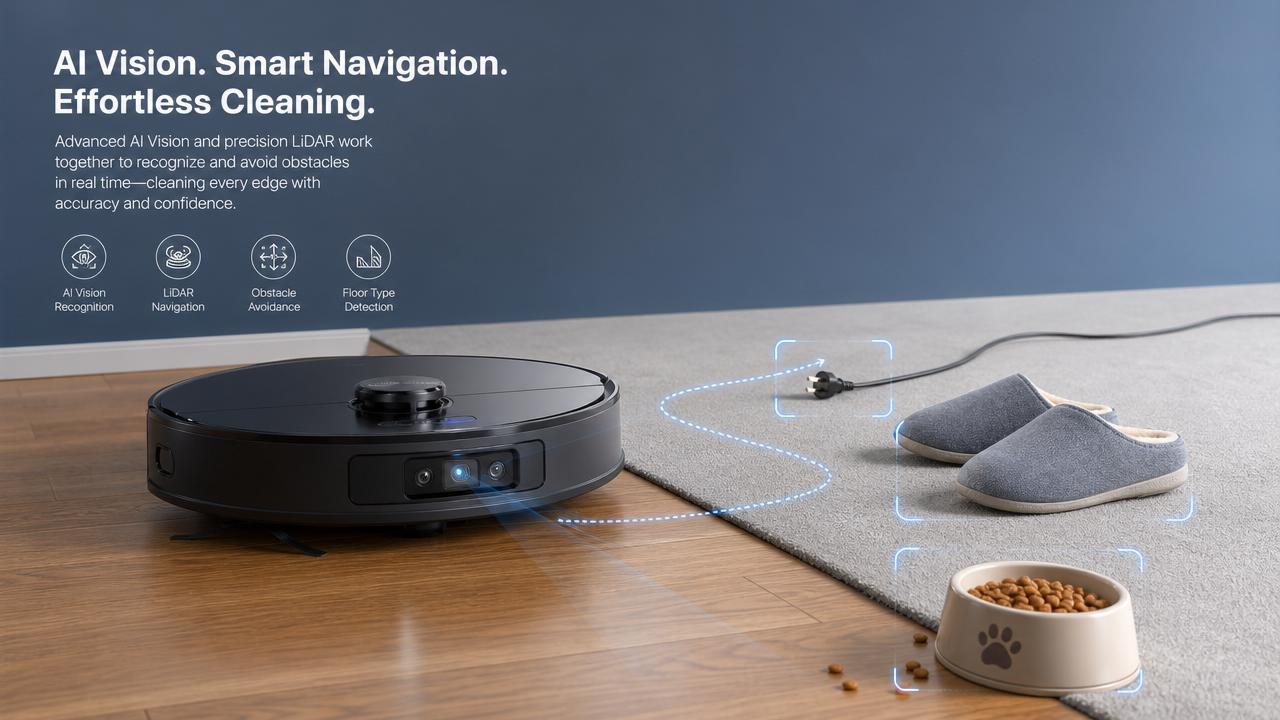
For technical evaluators, machine vision algorithms decide whether a robot cleaner performs reliably in lived-in spaces or only in controlled demos.
They influence obstacle detection, dirt recognition, route correction, and edge coverage under changing light, clutter, and floor materials.
This article explains how machine vision algorithms affect cleaning accuracy, which benchmarks matter most, and how to judge real-world performance beyond headline specifications.
What do machine vision algorithms actually do in robot cleaning?
Machine vision algorithms convert camera input into decisions a robot can use within milliseconds.
They detect objects, estimate distance, classify floor conditions, and support navigation when the robot faces dynamic home environments.
In modern cleaning systems, these models rarely work alone.
They are often fused with LiDAR, infrared sensors, wheel odometry, cliff sensors, and inertial measurements.
Still, machine vision algorithms often determine the quality of final decisions.
A robot may map a room correctly yet still fail near cables, socks, pet bowls, or reflective chair legs.
That gap usually comes from perception quality, not map resolution alone.
At a practical level, vision models support five accuracy-critical tasks:
- Obstacle detection and avoidance
- Dirt or debris recognition
- Room boundary and edge interpretation
- Surface-type identification
- Path correction after slippage or disturbances
When these tasks improve, cleaning accuracy usually improves in measurable ways.
How do machine vision algorithms improve obstacle avoidance accuracy?
Obstacle avoidance is the most visible proof of machine vision algorithms in action.
Older robots reacted after contact.
Vision-enabled robots can predict and reroute before collision, which protects furniture and preserves cleaning continuity.
Accuracy depends on three layers.
1. Detection sensitivity
The model must see low-profile, thin, dark, or partially hidden items.
Examples include cables, toys, slippers, and pet waste.
2. Classification precision
Seeing an object is not enough.
The robot must estimate whether to avoid widely, pass closely, or climb over safely.
3. Response latency
Even strong machine vision algorithms can fail if the processor reacts too slowly.
In narrow spaces, a delayed decision becomes a collision.
Better obstacle avoidance increases cleaning accuracy indirectly.
The robot wastes less time recovering from impacts, keeps straighter paths, and revisits fewer interrupted zones.
For homes with pets or children's items, machine vision algorithms can be the difference between usable automation and daily supervision.
Can machine vision algorithms identify dirt and adjust cleaning behavior?
Yes, but performance varies widely across product tiers and lighting conditions.
Some systems use machine vision algorithms to detect visible debris clusters, stain zones, or heavy-traffic regions.
Others combine visual signals with motor current, roller resistance, or acoustic cues.
This matters because cleaning accuracy is not only about coverage.
It is also about matching cleaning intensity to the actual mess.
A strong system may trigger:
- Repeated passes over dense debris
- Higher suction in visible dirt zones
- Mop pressure adjustment near dried stains
- Carpet avoidance during wet mopping
However, evaluators should not assume every AI camera feature improves results.
Some machine vision algorithms overfit to showroom debris and underperform on dust, crumbs, hair, or low-contrast stains.
The most useful test is repeatability.
If the same mess triggers the same cleaning response across several runs, the perception model is likely robust.
Which benchmarks best reveal whether machine vision algorithms are accurate?
Marketing terms like AI recognition or 3D vision reveal little without test design.
Evaluation should focus on outcomes linked directly to cleaning accuracy.
Good testing should also vary ambient light, floor reflectivity, furniture density, and object size.
A robot that performs well only under bright light may still disappoint in bedrooms, hallways, or evening routines.
What common mistakes distort the evaluation of machine vision algorithms?
Several errors can make a weak system look stronger than it is.
Relying on one obstacle type
Detecting a box is easier than detecting cords, fabric, transparent items, or soft waste.
Ignoring low-light performance
Many homes are not cleaned under ideal daylight.
Machine vision algorithms must hold accuracy in dim and mixed lighting.
Confusing map neatness with cleaning precision
A visually impressive map does not prove strong perception near floor-level hazards.
Testing only first-run behavior
Thermal load, battery level, and memory constraints can affect later runs.
Overlooking compute limitations
Advanced machine vision algorithms need enough onboard processing and power efficiency.
If compute budgets are tight, frame drops and delayed reactions reduce cleaning accuracy.
Within consumer hardware, this balance is crucial.
CSOS often highlights that algorithm quality and micro-power system design must evolve together, not separately.
How should machine vision algorithms be judged when comparing robot cleaners?
A useful comparison should combine perception quality, cleaning output, and system efficiency.
The following checklist helps structure comparison work.
The best machine vision algorithms are not simply more complex.
They are better trained, better optimized, and better integrated with navigation, motor control, and cleaning mechanics.
That system-level alignment is what produces consistent cleaning accuracy in actual homes.
What is the practical takeaway for evaluating cleaning accuracy?
Machine vision algorithms affect robot cleaning accuracy through perception speed, object understanding, route stability, and adaptive cleaning logic.
Their value appears most clearly in cluttered, mixed-light, multi-surface environments where simpler systems struggle.
For meaningful assessment, focus on measurable outcomes instead of feature labels.
Test small hazards, low light, edge zones, repeat runs, and dirt-triggered behavior changes.
If machine vision algorithms improve all five areas, they are likely contributing real cleaning accuracy rather than cosmetic intelligence.
For deeper analysis of smart cleaning systems, benchmark design, and consumer hardware intelligence, CSOS offers a useful lens on how vision, power, and control systems converge.
Related News
- Smart Health Explained: How Connected Devices Turn Daily Data Into Care DecisionsSmart health turns daily data from wearables and connected devices into practical care decisions. Discover how to interpret trends, improve routines, and know when to seek support.Time : Oct 12, 2026
- How to Select a Brushless Motor System for Torque, Speed, and Thermal LoadBrushless motor systems selection guide for matching torque, speed, gearing, controller limits, and thermal load to achieve reliable real-world performance.Time : Sep 25, 2026
- What Should You Do If a Smart Health Device Gives Inaccurate Readings?What should I do if a smart health device has inaccurate readings? Learn practical troubleshooting steps, safe comparison methods, and when to seek medical advice.Time : Sep 29, 2026