
Which smart cooking innovations actually save time?
Which Smart Cooking Innovations Actually Save Time?
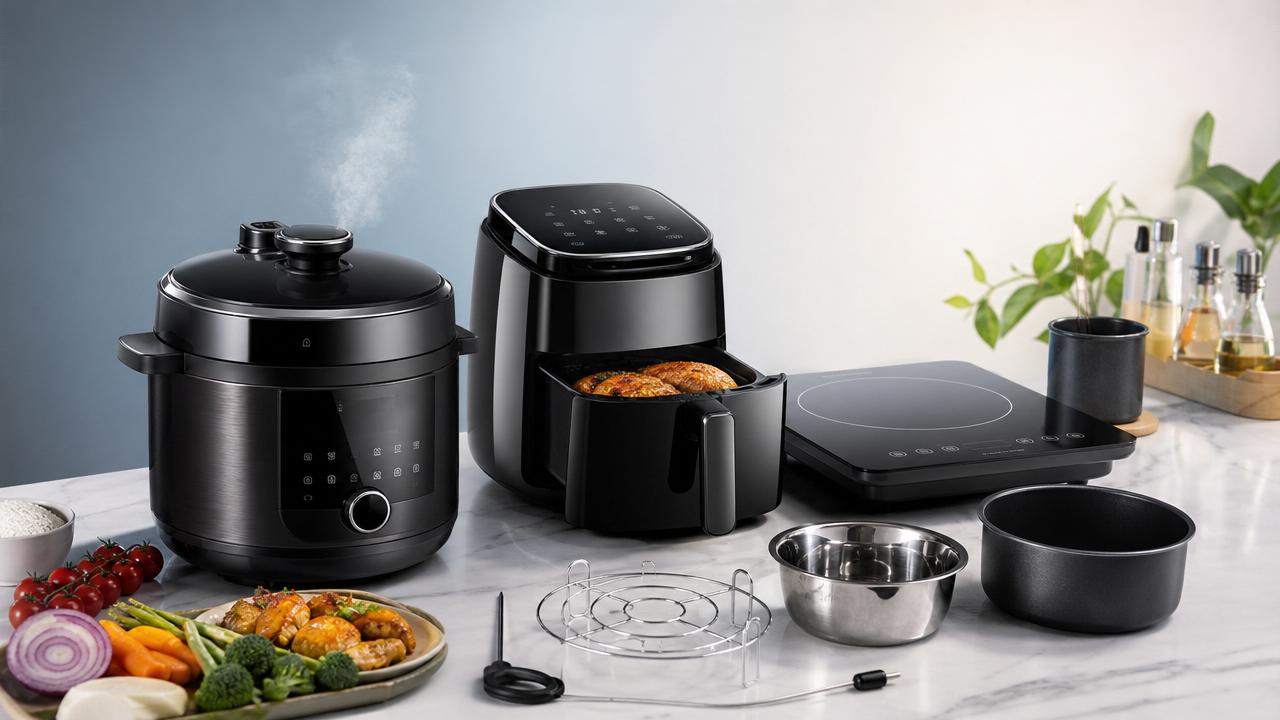
Not every connected gadget makes dinner faster, but the right smart cooking innovations remove real bottlenecks from daily meal prep.
For home users and appliance operators, time savings come from precise heat, guided recipes, automated motion, faster preheating, and easier cleanup.
Flashy app controls matter less than reducing watching, correcting, scrubbing, and second-guessing during everyday cooking.
Why Smart Cooking Innovations Need a Practical Checklist
Kitchen technology is crowded with voice controls, screens, sensors, and cloud recipes.
Some smart cooking innovations shorten dinner by ten minutes.
Others simply move the same work into an app.
A useful checklist separates automation from novelty.
The best smart kitchen tools save time in three ways.
- Reduce hands-on cooking steps, such as stirring, flipping, probing, or adjusting heat.
- Prevent failed meals that force extra cooking, reheating, or food waste.
- Shorten cleanup through removable parts, nonstick surfaces, steam loosening, or self-rinsing cycles.
This is why smart cooking innovations should be judged by workload removed, not by the number of connected features.
Core Checklist: Smart Cooking Innovations That Really Save Time
Use this checklist before buying or deploying any connected cooking appliance.
Each point focuses on measurable convenience, repeatable results, and daily usability.
- Prioritize automatic temperature control that holds steady heat, because fewer manual adjustments mean fewer interruptions during sauces, soups, grains, and proteins.
- Choose guided cooking systems with credible step timing, ingredient prompts, and doneness cues instead of recipe screens that only display static instructions.
- Look for integrated weighing, because built-in scales reduce measuring tools, speed prep, and improve consistency in baking, sauces, and meal kits.
- Use smart pressure cookers for beans, stews, rice, and tough cuts where sealed heat compresses long cooking into predictable cycles.
- Select air fryers with fast circulation, useful basket capacity, and shake reminders, not just Wi-Fi labels or decorative touch panels.
- Adopt induction cooktops with pan sensing and rapid power changes when boiling, searing, simmering, or recovering heat after adding cold food.
- Consider automated stirring attachments for risotto, custards, jams, and thick sauces where constant motion normally traps someone beside the stove.
- Use probe thermometers with alerts for roasts, poultry, fish, and bread, because accurate doneness reduces cutting, guessing, and overcooking.
- Favor multi-cookers that combine sauté, pressure, slow cook, rice, and warming functions without requiring pan transfers between stages.
- Check preheat speed honestly, since powerful heating elements and efficient chambers often save more time than advanced app dashboards.
- Evaluate cleaning design first, including dishwasher-safe parts, rounded corners, grease drainage, removable lids, and surfaces that do not trap food.
- Demand reliable offline controls, because smart cooking innovations become slower when basic functions depend on unstable apps or cloud logins.
Time-Saving Scorecard for Smart Cooking Innovations
Where Smart Cooking Innovations Work Best
Busy Weeknight Dinners
For weeknights, smart cooking innovations should remove decision fatigue.
The strongest options are smart pressure cookers, induction burners, and air fryers with reliable presets.
These tools handle repeatable meals well.
Rice bowls, roasted vegetables, chicken thighs, pasta sauces, and reheated leftovers all benefit from controlled heat and predictable timing.
Meal Prep and Batch Cooking
Batch cooking rewards appliances that run safely with limited supervision.
Here, smart cooking innovations save time by combining large capacity, warming modes, and repeatable programs.
A multi-cooker can prepare grains while an air fryer finishes vegetables.
A connected probe can track a roast while other prep continues.
Precision Cooking for Beginners
Beginners often lose time fixing mistakes.
Guided recipes, temperature sensors, and clear alerts make smart cooking innovations especially useful for unfamiliar techniques.
The real value is confidence.
When a device explains when to add ingredients or reduce heat, cooking becomes faster and less stressful.
Small Kitchens and Shared Spaces
Small spaces need fewer devices doing more work.
The best smart cooking innovations combine functions without creating storage problems.
A compact air fryer oven or multi-cooker may outperform several single-purpose appliances.
However, removable parts must be easy to wash in limited sink space.
Commonly Overrated Smart Cooking Innovations
Some connected features sound convenient but add little real speed.
They can still be enjoyable, but they should not drive the purchase alone.
- Avoid buying only for voice control, because speaking a command rarely beats turning a knob when hands are already near the appliance.
- Question app-only presets, since a touchscreen recipe library does not save time if prep, monitoring, and cleanup remain unchanged.
- Be cautious with camera-based oven monitoring, because it helps visibility but may not improve doneness without accurate temperature feedback.
- Skip oversized appliances when capacity exceeds actual needs, because extra cleaning, storage, and preheating can erase any speed advantage.
The practical test is simple.
If smart cooking innovations do not remove a step, prevent an error, or reduce cleanup, the time savings are probably small.
Risks and Ignored Details Before Buying
Cleaning Can Cancel the Savings
A device that cooks fast but cleans slowly is not a time saver.
Check lids, seals, baskets, blades, and drip trays before trusting marketing claims.
Automation Still Needs Good Food Prep
Smart cooking innovations cannot fix uneven chopping, overloaded baskets, or poor seasoning.
Automation works best when ingredients are prepared consistently.
Connectivity May Become Friction
Wi-Fi pairing, account creation, and firmware updates can waste time.
Choose appliances with full manual operation and dependable physical controls.
Safety Cannot Be Treated as Optional
High heat, pressure, motors, and batteries require credible safety design.
Look for recognized certifications, clear venting, stable bases, and reliable shutoff behavior.
How to Test Smart Cooking Innovations at Home
Run a simple seven-day test before deciding whether an appliance deserves counter space.
- Time the full process, including prep, preheat, cooking, release, resting, washing, drying, and storage.
- Repeat one familiar meal twice, once manually and once with the smart appliance.
- Record hands-on minutes separately from unattended cooking minutes.
- Track mistakes avoided, such as burned rice, dry chicken, split sauces, or soggy reheats.
- Keep the appliance only if it saves time across several meals, not one perfect demo.
This method exposes whether smart cooking innovations fit real routines.
It also reveals hidden costs, such as noise, awkward washing, or complicated storage.
Practical Buying Guidance
Start with cooking habits, not product categories.
If meals involve stews, grains, beans, and batch prep, a smart pressure cooker is usually the strongest first choice.
If meals rely on frozen foods, reheating, and crisp textures, choose a capable air fryer oven.
If stovetop control is the main pain point, induction provides immediate time savings.
For proteins, baking, and roasting, a connected thermometer may be the cheapest upgrade.
For sauces and custards, automated stirring can remove the most annoying hands-on minutes.
The best smart cooking innovations often work together.
A realistic setup might combine induction, a probe thermometer, and one multi-cooker rather than five specialized machines.
Summary and Next Action
Smart cooking innovations save time when they control heat accurately, automate repetitive work, guide timing, and simplify cleanup.
The winners are usually pressure cooking, induction, air frying, connected thermometers, guided cooking, and automated stirring.
The weakest options are features that only add screens, apps, or voice commands without reducing real kitchen labor.
For the next meal, choose one recurring bottleneck.
Then test one appliance against prep time, hands-on time, error reduction, and cleaning effort.
That checklist will reveal which smart cooking innovations truly belong in a faster, calmer kitchen.
Related News
- How Air Fryer Temperature Control Works: Sensors, Feedback, and HeatExplore temperature control cooking systems in air fryers. Discover how sensors, feedback, and airflow manage heat—and what to compare for more consistent cooking results.Time : Oct 19, 2026
- Which Air Fryer Specifications Matter Most for Private Label Sourcing?What air fryer specifications matter most for private label sourcing? Explore heating, temperature control, materials, compliance, and factory QC to source a safer, standout product.Time : Sep 25, 2026
- How to Vet an Air Fryer Manufacturer for Quality, Capacity, and ComplianceAir fryers manufacturer vetting guide: assess quality, usable capacity, production controls, certifications, and compliance to source reliable products with confidence.Time : Sep 21, 2026