
When smart home appliances save time but waste money
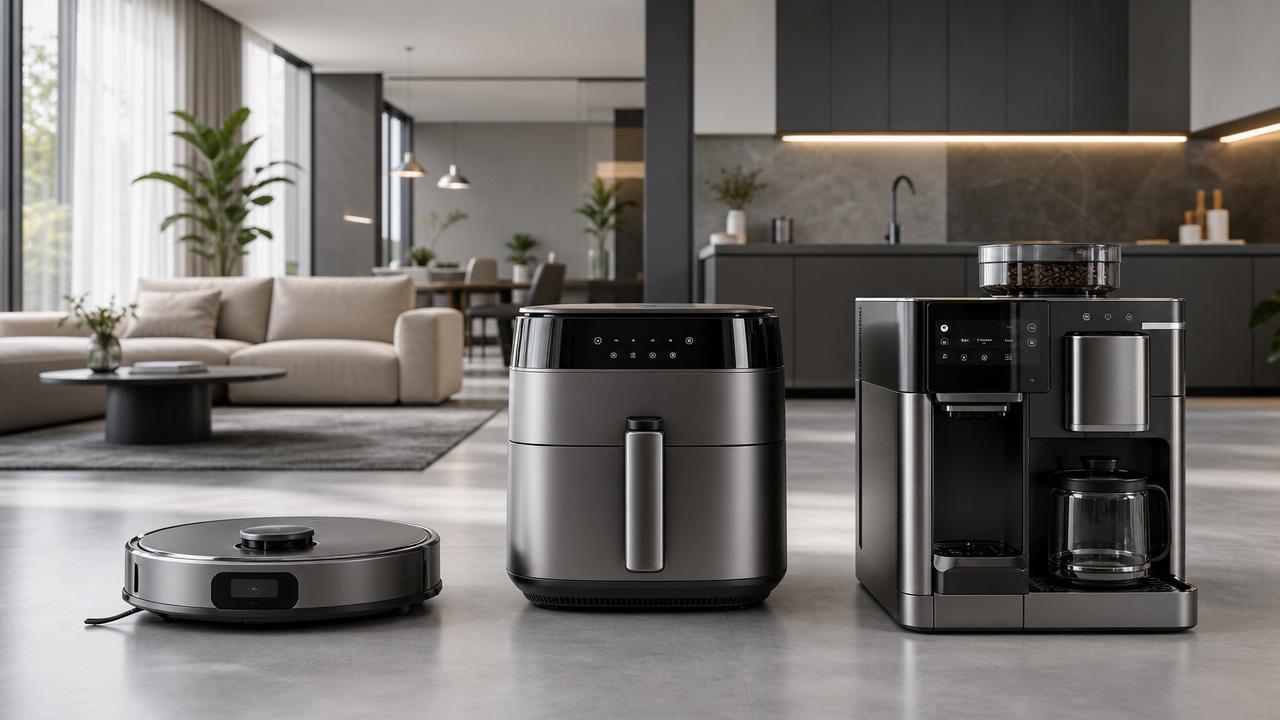
Smart home appliances promise frictionless living, but for business evaluators, convenience alone is not a winning metric. From robot vacuums to smart kitchen systems, the real question is whether these devices deliver measurable value or quietly erode margins through high acquisition, maintenance, and upgrade costs. This article examines when smart home appliances truly save time—and when they become expensive lifestyle illusions.
For procurement teams, category managers, investors, and DTC decision-makers, the challenge is not whether demand exists. It is whether a product can sustain acceptable return rates, service costs, software support, and replacement cycles over 12 to 36 months.
That question is especially relevant in categories tracked by CSOS, where machine vision, battery systems, thermal control, and human-machine interaction are now shaping not only product performance, but also gross margin, compliance exposure, and brand durability in global markets.
Why Smart Home Appliances Save Time but Not Always Money
The strongest commercial case for smart home appliances is labor compression. A robot vacuum can reduce 4 to 6 manual cleaning sessions per week. A smart air fryer can cut cooking supervision time by 15 to 25 minutes per meal. A connected espresso system can standardize beverage output across repeated use.
However, time saved does not automatically convert into economic value. In many consumer hardware categories, buyers absorb hidden costs through consumables, software subscriptions, battery degradation, spare parts, and premature model obsolescence. That is where apparent convenience starts to dilute total value.
The core mismatch: usage value versus ownership cost
A device may perform well in the first 90 days yet become financially inefficient by month 18. This often happens when the product depends on proprietary filters, docking accessories, app lock-ins, or high-friction after-sales processes. In business evaluation, these costs matter more than demo-day performance.
For example, a premium floor-cleaning robot with auto-empty, auto-wash, and hot-air drying may remove 70% to 85% of routine floor labor. But if the base station requires regular detergent cartridges, mop replacement, brush modules, and out-of-warranty service, payback can stretch far beyond the consumer’s actual loyalty window.
Where the value equation typically breaks
- High initial selling price relative to task frequency
- Maintenance intervals shorter than expected, such as every 30 to 60 days
- Battery or motor performance decline after 18 to 24 months
- Software features gated behind paid updates or premium app tiers
- Repair logistics that cost more than practical replacement
This issue is common across smart cleaning appliances, connected kitchen systems, therapy chairs, and portable outdoor energy products. The more sensors, boards, pumps, valves, and actuators involved, the more likely the total ownership cost diverges from the simple promise of saved time.
A practical decision lens for evaluators
Business evaluators should separate the “wow” factor from the “repeatable economics” factor. Products that save 10 minutes per day but trigger a 12% return rate or a 7% annual warranty burden may create weaker economics than simpler devices with fewer premium functions but higher reliability.
The table below shows how common smart home appliances should be assessed beyond surface-level convenience claims.
The key takeaway is that smart home appliances create real time savings only when product durability, maintenance frequency, and support systems are aligned. Without that alignment, convenience becomes expensive overhead packaged as innovation.
How Business Evaluators Should Measure Real Value
For commercial assessment, smart home appliances should be treated as lifecycle assets, not impulse electronics. The most useful framework combines 4 dimensions: acquisition cost, operating cost, retention impact, and service burden. Looking at only retail price is usually a mistake.
1. Acquisition cost versus feature inflation
Many premium models bundle advanced LiDAR mapping, AI object recognition, self-cleaning stations, app control, voice integration, and multi-floor memory. Yet not every user needs all 6 to 8 feature layers. Feature inflation often adds 25% to 60% to cost without proportional use frequency.
A strong evaluation asks which functions directly reduce labor, reduce error, or increase usage consistency. Features that are activated once in setup but rarely influence weekly behavior do little to justify higher landed cost.
2. Operating cost over 12 to 24 months
This is where many smart home appliances lose their economic appeal. Ongoing costs may include water tanks, filters, detergent solutions, brush heads, descaling kits, replacement batteries, and software support. For battery-driven devices, effective runtime may drop 15% to 30% after sustained charging cycles.
A robot cleaner that looks attractive at purchase can become expensive if the annual accessory basket approaches 10% to 18% of device value. The same principle applies to kitchen systems that need frequent part replacement to preserve food safety or pressure stability.
3. Service burden and return complexity
Large hardware categories such as therapy chairs, outdoor power stations, or premium mopping stations face higher reverse-logistics costs than compact gadgets. Once products weigh 20 kg, 30 kg, or more, each return or swap can materially compress profit, especially in cross-border DTC operations.
For evaluators, the right metric is not only failure rate, but cost per service event. A 3% defect rate on a bulky smart appliance can be more damaging than a 6% issue rate on a small countertop device if freight, packaging, and diagnostic labor are significantly higher.
4. Retention, upgrade, and replacement timing
Some smart home appliances create recurring engagement and brand stickiness. Others peak in novelty during the first 30 days and then settle into irregular use. Products with a natural replacement cycle of 24 to 36 months may support better repeat sales than categories with long life but weak accessory monetization.
This matters for DTC brands because lifetime value depends on more than the first transaction. If a product builds an ecosystem of accessories, compatible modules, or adjacent categories, the initial margin sacrifice may still be justified. If not, a high-tech launch can turn into a one-time revenue spike with expensive support tail.
A useful checklist before approving a SKU
- Estimate practical use frequency per week, not theoretical use frequency.
- Map consumable and maintenance costs for 12, 18, and 24 months.
- Review repairability, spare parts availability, and average diagnostic steps.
- Check compliance exposure, especially for Li-ion, thermal systems, and pressure systems.
- Model return scenarios by shipping weight, package size, and replacement policy.
The next table provides a decision-oriented framework that business evaluators can use when screening smart home appliances across cleaning, cooking, and wellness categories.
This framework is especially useful in CSOS-tracked sectors, where algorithm quality, battery safety, motion control, and UI design can make the difference between a scalable product and an expensive support problem.
Where Smart Home Appliances Usually Deliver Strong ROI
Not all categories are over-engineered. Some smart home appliances create very clear payback when they are matched to the right user profile and home environment. The strongest returns typically appear where tasks are repetitive, measurable, and hard to skip.
High-frequency cleaning environments
Households with pets, children, or mixed hard-floor layouts often see the best results from advanced robotic cleaning. If floors need attention 5 to 7 times per week, automation can replace enough labor to justify both premium navigation and a self-maintenance dock.
In these settings, smart home appliances are not simply convenience goods. They become routine workload reducers, especially when AI vision avoids pet waste, cables, and clutter more accurately than first-generation bump-and-run machines.
Standardized home food preparation
Connected cooking systems perform well when consumers want repeatable output rather than culinary experimentation. Air fryers, steam ovens, and guided coffee systems create value when they compress monitoring time and reduce user error across 3 to 5 meals or beverages each week.
For DTC brands, this category benefits from visible outcome marketing. Crispy texture, brew consistency, and preset reliability are easier to demonstrate than abstract connectivity. That makes conversion messaging stronger when the product’s intelligence improves a clearly seen result.
Health and recovery routines with repeat use
Therapy chairs and recovery devices can justify higher price points when they replace recurring paid sessions or increase use consistency at home. But the threshold is high. Evaluators should look for categories where users realistically engage 3 or more times per week, not just during the first month.
The commercial upside improves when the product has durable mechanics, ergonomic scanning accuracy, and low maintenance complexity. In premium hardware, advanced functionality only pays back if reliability stays stable through several years of real household usage.
Where Smart Home Appliances Become Expensive Lifestyle Illusions
The weak side of the market appears when connected features exist mainly to support pricing, not real task improvement. This is common when apps duplicate onboard controls, when voice support adds little daily utility, or when hardware promises autonomy but still requires frequent manual intervention.
Low-frequency use cases
If the product automates a task performed only once every 1 to 2 weeks, it is difficult for smart home appliances to show strong value unless service needs are minimal. Infrequent use makes software sophistication much less important than simplicity, storage, and durability.
High-maintenance automation
A device that claims hands-free operation but requires emptying, rinsing, wiping, recalibrating, or descaling every few days may save effort in one step while adding friction in three others. That kind of automation often photographs well for ads but underperforms in retention and referrals.
Unclear software value
Connectivity alone is not a business case. If the app does not improve scheduling, diagnostics, personalization, or energy management, then wireless control is simply an added development and support burden. In some cases, it also increases privacy concerns and firmware maintenance costs.
Common red flags for evaluators
- More than 3 manual upkeep steps per core use cycle
- Replacement parts available only through one branded channel
- Core functions weakened when offline or after app discontinuity
- Large price premium with no measurable increase in task completion rate
- Bulky product format with expensive reverse logistics
In practical terms, the best smart home appliances are not the ones with the longest spec sheet. They are the ones with the shortest gap between promised automation and lived experience.
What CSOS-Style Market Intelligence Adds to the Decision
For business evaluators working across global consumer hardware, category success now depends on more than industrial design. Algorithms, battery systems, thermal behavior, component durability, and regulatory readiness all influence whether smart home appliances scale profitably across regions.
This is why intelligence-led evaluation matters. In cleaning robotics, navigation quality and obstacle recognition can decide whether a premium product truly reduces labor. In kitchen systems, temperature stability and fluid control shape repeatable output. In wellness hardware, motion path precision and ergonomic fit affect both satisfaction and returns.
CSOS-style analysis is valuable because it connects technical depth with commercial judgment. It helps teams judge whether a hardware concept has defendable user value, manageable compliance exposure, and a support model strong enough for DTC expansion in North America, Europe, and other demanding markets.
A Smarter Buying Rule for Business Evaluators
The right question is not, “Are smart home appliances popular?” The better question is, “Which smart home appliances convert time savings into durable economic value over the full ownership cycle?” Once that shift happens, evaluation becomes clearer and less vulnerable to hype.
Prioritize products that reduce frequent labor, require manageable maintenance every 30 to 90 days, keep accessory costs predictable, and preserve core performance through 24 months or more. Be cautious with hardware that adds software complexity without improving outcomes users can feel every week.
If you are assessing smart cleaning robots, connected kitchen systems, wellness hardware, or adjacent lifestyle electronics, a deeper intelligence framework can prevent margin leakage before it appears in returns, support tickets, and discounting pressure. To evaluate smarter product opportunities, refine your category strategy, or review total-cost risk in emerging consumer hardware, contact us to get a tailored solution and explore more market-ready insights.
Related News
- Component Sourcing: How to Vet Manufacturers for Traceability and Lead TimesVetting a component sourcing manufacturer? Learn how to verify traceability, validate lead times, and use trial orders to reduce supply risks before committing.Time : Oct 27, 2026
- Sizing Micro-Power Systems for Off-Grid Rural Projects in Latin AmericaDiscover micro-power systems Latin America’s rural projects can rely on. Learn to size solar, batteries, and inverters for dependable off-grid power.Time : Oct 25, 2026
- Choosing a Micro-Mobility Systems Supplier: Safety, Fleet Integration, and SupportChoose a micro-mobility systems supplier with confidence. Discover how to assess battery safety, fleet integration, and after-sales support to reduce downtime and protect your investment.Time : Oct 24, 2026