
Smart cooking innovations that save time and cleanup
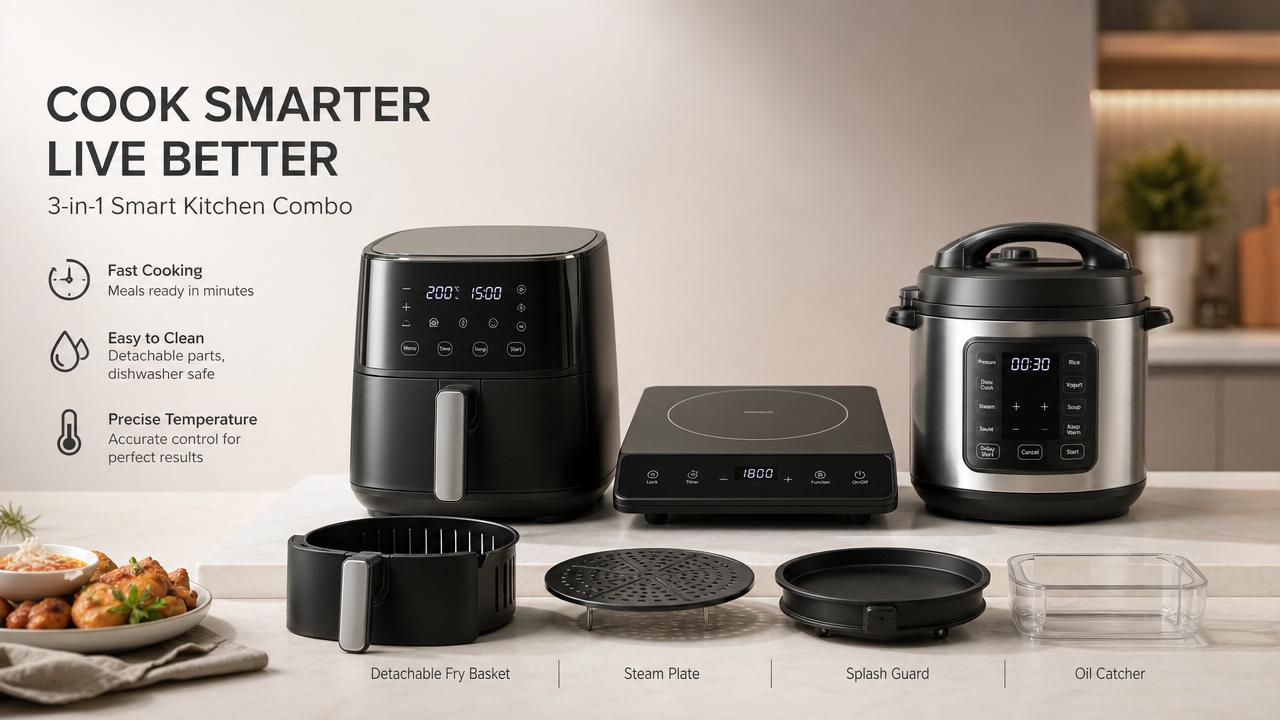
Smart cooking innovations are reshaping daily kitchen routines for households that want faster meals, less cleanup, and more reliable results. Practical upgrades now reduce prep friction, limit greasy mess, and support better timing.
For the broader consumer hardware market, these changes matter beyond convenience. They connect software, thermal control, sensors, and compact power systems with real lifestyle value in modern living.
This guide explains where smart cooking innovations deliver the most benefit, how needs differ by scenario, and what to check before choosing appliances that truly save time and cleanup.
Why smart cooking innovations matter in different home scenarios
Not every kitchen problem is the same. Some homes struggle with rushed mornings, while others face heavy dinner prep, frequent entertaining, or limited counter space.
That is why smart cooking innovations should be judged by scenario, not hype. The best appliance is the one that reduces steps, prevents errors, and shortens cleanup in your routine.
In many cases, time savings come from automation. Cleanup savings come from nonstick surfaces, dishwasher-safe parts, grease control, and self-cleaning functions.
Consistency also matters. Precision heat management, guided presets, and sensor-based cooking help avoid burnt edges, undercooked centers, and repeated guesswork.
Scenario one: busy weekday kitchens need speed without extra mess
Weekday cooking often happens under pressure. Short windows before work, school, or evening activities create demand for appliances that heat quickly and clean easily.
Here, smart cooking innovations like air fryers, induction cookers, and multifunction pressure cookers stand out. They shorten preheat time and reduce splatter compared with traditional methods.
Core judgment points for fast weekday meals
- Does it support one-touch programs for common meals?
- Can removable parts go directly into the dishwasher?
- Does it cook proteins and vegetables in one chamber or cycle?
- Can it reduce oil smoke and countertop splashes?
For this scenario, compact smart cooking innovations work best when they reduce total task count. Less stirring, fewer pans, and easier basket washing create the real efficiency gain.
Scenario two: small apartments need multifunction cooking systems
Limited kitchens require every appliance to justify its footprint. In small homes, smart cooking innovations must replace multiple tools instead of adding clutter.
Combination ovens, toaster-air fryer hybrids, and smart multicookers fit this need. They roast, steam, pressure cook, slow cook, and reheat with one main device.
What to prioritize in compact spaces
Look for vertical designs, stackable accessories, and hidden cord storage. Also check whether the appliance needs side clearance, lid opening space, or special ventilation.
The best smart cooking innovations in tight kitchens also simplify cleaning logistics. Fewer separate attachments and smoother interior surfaces can save more effort than extra cooking modes.
Scenario three: family meal prep needs batch cooking and reliable consistency
Larger households need throughput. They often prepare more portions, more ingredients, and more varied textures in one session.
In this setting, smart cooking innovations succeed when they balance capacity with repeatable results. Dual-zone air fryers, larger ovens, and app-guided meal systems help coordinate timing.
Key signals for family-friendly performance
- Independent temperature control for different foods
- Large baskets or trays without cold spots
- Timers that synchronize dish completion
- Grease capture systems that reduce post-meal scrubbing
For families, cleanup becomes part of the value equation. Dishwasher-safe racks, removable crumb trays, and stain-resistant coatings are often more useful than decorative smart features.
Scenario four: coffee, breakfast, and daily rituals benefit from precision automation
Morning routines reward consistency. Precision coffee machines, smart kettles, and guided breakfast appliances help deliver repeatable results before attention and time fully arrive.
This is where smart cooking innovations meet comfort. Temperature stability, timed starts, and automatic cleaning cycles reduce friction while improving taste and routine satisfaction.
Semi-automatic espresso systems are a strong example. Controlled pressure, stable heating, and milk-frothing support allow better drinks at home without complex manual technique.
How scenario needs differ across smart cooking innovations
This comparison shows why smart cooking innovations should match actual use patterns. A powerful appliance can disappoint if its cleaning burden or footprint outweighs its convenience.
Practical recommendations for choosing the right setup
The most useful buying decision starts with one question: where does cooking feel slow, messy, or inconsistent today? That pain point should guide the next upgrade.
- Map one week of cooking tasks and identify the repeated bottleneck.
- Choose smart cooking innovations that remove that specific bottleneck first.
- Prioritize easy-clean surfaces over rarely used advanced modes.
- Check basket, tray, and reservoir access before comparing app features.
- Estimate storage and ventilation needs to avoid counter crowding.
Best upgrade paths by kitchen pattern
- For quick dinners: start with an air fryer or pressure multicooker.
- For compact kitchens: choose one appliance with at least three useful modes.
- For frequent hosting: invest in larger-capacity, dual-zone cooking systems.
- For coffee-first routines: focus on temperature control and auto-clean support.
Common mistakes when evaluating smart cooking innovations
One common mistake is overvaluing app connectivity. Wireless control can help, but it does not compensate for difficult cleaning, loud operation, or poor heat consistency.
Another mistake is judging only cooking speed. Some smart cooking innovations finish fast but leave multiple greasy parts, awkward corners, or strong residual odors.
Capacity confusion is also frequent. Large baskets sound attractive, but oversized appliances may underperform in small kitchens or create unnecessary storage problems.
Finally, many overlook maintenance cycles. Filters, descaling, water systems, and gasket care affect long-term satisfaction as much as first-week performance.
The bigger lifestyle value behind cleaner and faster cooking
Smart cooking innovations are part of a wider movement in consumer technology. Homes increasingly expect appliances to combine intelligence, efficiency, and low-effort maintenance.
This aligns with how modern living systems are evolving across cleaning robots, culinary appliances, and other connected hardware. Performance now means saving attention, not just adding power.
The strongest products blend practical engineering with human-centered design. Better airflow, accurate temperature control, durable coatings, and intuitive interfaces matter more than novelty alone.
Next steps for building a smarter, cleaner kitchen routine
Start with one high-friction scenario, not a complete kitchen overhaul. Focus on the meal, time window, or cleanup problem that repeats most often.
Then compare smart cooking innovations using three filters: time saved, mess reduced, and consistency improved. If an appliance wins in all three, it deserves serious attention.
A well-chosen upgrade can make everyday cooking calmer, cleaner, and more enjoyable. That is the real promise of smart cooking innovations in modern homes.
Related News
- How Air Fryer Temperature Control Works: Sensors, Feedback, and HeatExplore temperature control cooking systems in air fryers. Discover how sensors, feedback, and airflow manage heat—and what to compare for more consistent cooking results.Time : Oct 19, 2026
- Which Air Fryer Specifications Matter Most for Private Label Sourcing?What air fryer specifications matter most for private label sourcing? Explore heating, temperature control, materials, compliance, and factory QC to source a safer, standout product.Time : Sep 25, 2026
- How to Vet an Air Fryer Manufacturer for Quality, Capacity, and ComplianceAir fryers manufacturer vetting guide: assess quality, usable capacity, production controls, certifications, and compliance to source reliable products with confidence.Time : Sep 21, 2026